
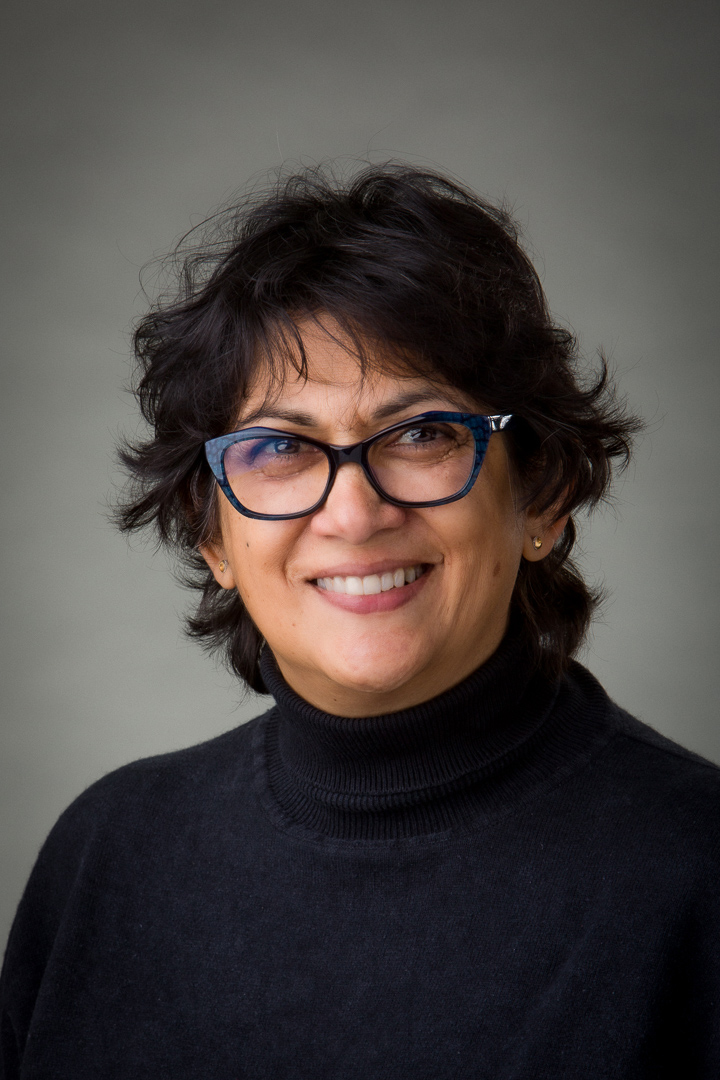
Shani Mootoo
Shani Mootoo was born in Ireland and raised in Trinidad, relocating to Canada in her early twenties. She earned a Bachelor of Fine Arts at the University of Western Ontario (now Western University) in 1980 and a Master of Arts in English and Theatre from the University of Guelph in 2010. She practiced initially as a video maker and visual artist—her works having been shown at galleries across here and internationally, including at the Museum of Modern Art in NYC, and in the TransCulture Pavillion of the Venice Biennale in 1995. For the last thirty years Mootoo has concentrated on novel writing, poetry and photo-based work.
She has written one book of short stories, three books of poetry, and six novels and is well anthologised. Her work has been translated into several languages and has been written about by scholars internationally.
Among the novels are Starry Starry Night, Polar Vortex, Cereus Blooms at Night and Moving Forward Sideways Like a Crab. She is a four-time nominee for the Giller Prize, and her work has been longlisted for the Booker Prize and the IMPAC Dublin Literary Award, and shortlisted for the Lambda Literary Prize, and the Big Other Book Awards.
Her poetry books include Oh Witness Dey!, Cane | Fire, and The Predicament of Or.
Mootoo has served as writer-in-residence at Simon Fraser University, University of Alberta, University of Guelph, University of Toronto, The University of the West Indies, Trinidad, and Mills College, Oakland, California. She was awarded the degree of Doctor of Letters honoris causa from Western University, is a recipient of Lambda Literary’s James Duggins Outstanding Mid-Career Novelist Prize, the Writers’ Trust Engel Findley Award, The National Library’s Library and Archives Scholar Award, and is the winner of the 2026 Blue Metropolis Violet Literary Prize.
Speaking Topics
The Role of Literature and The Arts in Community Building.
The age-old question of what is the role of the artist in society has come to the fore in the last several years, and raises more questions for us. Can we afford, these days, to be artists for art’s sake? What about the sheer pleasure in making art? When and how does—and should– responsibility to community, to humanity, to speaking up and out take precedence over art making? Does the artist have a role to play in social change, and in society in general?
Writers, filmmakers, and artists in general are story tellers. We tell the stories we know, our own stories, but we also speculate, document, imagine and reimagine the world we have inherited, the one we are living in, and futures awaiting us.
You Are What You Read. You Are What You Watch.
How do we cultivate ways of living and good thinking? The arts encourage us to see ourselves in surprising ways. We recognize aspects of ourselves in characters in books and on the screen and in our ways of handling situations that we could only see through methods of storytelling that aren’t – yet are so very much – about us. But should we only consume what confirms for us our ideas of ourselves and our world, or should we take advantage of the works of artists and writers who are from other places, other cultures, other times? Doing the latter can transport our minds, open them, and widen our worlds.
The Value of Writing and Reading Canadian Literature, The Value of Writing and Reading Beyond Our Borders:
The encouragement of cultural production in Canada has come in various forms with perks to makers and to the industries that support them. We can only be deeply grateful for this. But while such support has fostered artists and the production of their works in various art media, have we become obsessed to a fault with an inward-looking gaze? If so, to what end, and how might we become bigger players on a bigger stage? For starters, reading beyond our experiences, our times and national spaces can not only broaden horizons but bring out greater understanding of lives, locales, cultures and concerns dissimilar to our own.
Testimonials
An accomplished and award-winning writer, Shani Mootoo is also a scintillating platform speaker and thinker, bringing her unique sense of artistry and vision to the talk at hand. I invited her to give a plenary lecture at University College Dublin and proposed her for the same at the University of Marburg, among others, for which she probed the limits of and invited us to reevaluate our assumptions. Her presentations are consistently nuanced, disentangling complexities and offering insight, clarity, and wisdom. – Linda Morra, literature professor and host/writer of award-winning podcast, Getting Lit with Linda
Shani in the Media
Phillips University: Canada Day Keynote
To book Shani Mootoo, contact Rob Firing at speakers@transatlanticagency.com.

Wyatt Sharpe
“Wyatt is the future of journalism, and with him it already looks pretty good.” – Peter Mansbridge, former host of The National
Wyatt Sharpe is a 17-year-old journalist and broadcaster, and the host of The Sharpe Exchange, a long-form political interview program.
He has conducted more than 500 interviews with political and public figures, including Justin Trudeau, R.F.K. Jr., Hunter Biden, James Carville, Chris Christie, Finland’s President Alexander Stubb, former Israeli Prime Minister Naftali Bennett, and many others. He was one of the youngest cable news anchors in North America and co-founded the Future Voters Summit.
His debut book The Disillusioned Generation: Reclaiming Purpose in an Age of Broken Promises, came out on October 20th, and is available to order now. Wyatt argues that the problem is not that young people are tuned out of politics, it’s that they are tuned in closely enough to have concluded that the institutions asking for their participation have stopped answering them.
Follow Wyatt on Instagram at @_wyattsharpe and check out his website to see more of his work and stay up to date.
Speaking Topics
The Disillusioned Generation: Reclaiming Purpose in an Age of Broken Promises
As an extension on his book and hundreds of conversations with leaders across North America, Wyatt Sharpe explains why so many young people have tuned out of democratic life, and why it isn’t apathy. He breaks down the forces driving the trust gap, from broken promises to a media environment built for outrage, and offers practical steps institutions, campaigns, educators, and employers can take to re-earn young people’s confidence. Audiences leave with a clearer picture of what the next generation of voters actually wants and how to reach them.
The Art of the Question: Lessons from 500+ Interviews with the World’s Most Powerful People
As host of The Sharpe Exchange, Wyatt has sat across from presidents’ advisers, senators, sheriffs, and celebrities. In this talk, he shares what he’s learned about preparation, listening, handling evasion, and building trust with people who are trained not to give straight answers. It’s a behind-the-scenes look at accountability journalism, and a toolkit for anyone who needs to ask hard questions and get real answers, whether in a newsroom, a boardroom, or a negotiation – it is made especially captivating given his age, and the unique insights he can provide on how to get people to take you seriously… because, after all, if they are taking a 17-year-old seriously, they will take you seriously.
Start Before You’re Ready: Youth, Leadership, and Finding Your Voice
Wyatt testified before Parliament at 13, became one of the youngest cable news anchors in North America, co-founded the Future Voters Summit, and built an independent media platform from scratch. In this talk, he challenges the idea that young people have to wait their turn to lead. Through stories of setbacks and breakthroughs, he shows audiences how to turn curiosity into action.
Moderating, Hosting, and Emceeing
Wyatt is a warm, witty and lively MC and event host. As a moderator, he expertly guides guests through engaging, thought-provoking conversations and debates.
Testimonials
“Wyatt is well-prepared and knows how to conduct a compelling and incisive interview that gets to the heart of a story. The future looks bright.” – Catherine McKenna, former Minister of the Environment and Infrastructure
“As a Ukrainian, I know what it’s like to stand for truth and freedom of speech. Wyatt is an outstanding example of a person who stands for these values. He represents the future of global journalism.” – Iuliia Mendel, former Press Secretary to President Zelenskyy of Ukraine
Wyatt in the Media
To book Wyatt, contact Rob Firing and Kate Moody at speakers@transatlanticagency.com.

Gill Deacon
“I can truly say that to hear Gill’s voice filling the theatre—familiar, intelligent, revelatory, comforting—this is the voice I want to hear more of as we all navigate the most tumultuous times on planet earth.” — Melanie Doane, Juno-award winning musician and artistic director, Doane Music School
Gillian Deacon is an award-winning broadcaster and bestselling author who spent over 10 years as host of Here & Now, Toronto’s afternoon drive show on CBC Radio One. She is a regular guest host on CBC radio’s flagship network arts program Q. She currently hosts the popular Apple-Featured podcast A Love Affair with the Unknown.
Gill is the author of the national bestsellers There’s Lead in Your Lipstick: Toxins in Everyday Bodycare and How to Avoid Them(Penguin, 2011), and Green For Life (Penguin, 2008) and the memoir Naked Imperfection (Penguin, 2014). Her latest book A Love Affair With The Unknown: Leaning into the Uncertainty of Modern Life was published by House of Anansi in January 2026.
She has written for the Globe and Mail, CBC.ca and Chatelaine magazine. She was awarded a one-month paid residency in the Literary Journalism program of the Banff Centre for the Arts.
Gill worked for many years on television, as host of CBC’s The Gill Deacon Show, and before that as co-host of @discovery.ca for five years on Discovery Channel Canada and Discoveries This Week for Discovery Science Channel in the U.S. Her work as a broadcaster has earned Gill a Gold medal at the New York Film and Television awards and a Canadian Screen Award nomination.
A former director with WWF Canada, Evergreen Foundation and Writers’ Trust, Gill lives in Toronto with her family. You can learn more about Gill and her outstanding career on her website here.
Speaking Topics
Learning to Love the Question more than the Answer
What if uncertainty isn’t something to fear, but something to embrace? How can we reframe the way we think about not knowing all the answers and grow more comfortable with—even enthusiastic about—the liminal? Gill’s talk encourages a new relationship to fear, a greater tolerance for ambiguity, and a renewed capacity for wonder. Her personal story of resilience is the starting point for an invigorating, inspiring keynote that leaves audiences filled with hope, invigorated by the surprising strength that can emerge when we stop trying to outrun the unknown and learn, instead, to see it as the birthplace of possibility.
Curiosity Is a Competitive Advantage: Why Innovation Depends on Not Knowing
From art to science to leadership, nothing original emerges from certainty. Gill’s talk makes a compelling case that creativity, insight, and ethical decision-making all require a tolerance for not knowing. Clinging too closely to hard data is a path to peril. When we cling to our certainties, we become closed-minded; assumptions shut us off from learning and observing other possibilities. By reframing our relationship with the unknown, Gill’s talk leaves audiences motivated to be resourceful, innovative and courageous.
Leading in the Liminal: How to Make Better Decisions When the Future Is Unclear
No matter how much we may wish it were otherwise, uncertainty and upheaval are the reality of our times. Individuals and organizations alike are operating in an “in-between” state—between old models and new, certainty and ambiguity, stability and disruption. But a rush toward control, tantalizing though it may seem, is shortsighted. Gill’s talk helps leaders stay grounded, present and effective when there’s no clear roadmap, as she reframes uncertainty not as a failure of planning, but as a prerequisite for growth and meaningful change. Audiences will come to see uncertainty as productive terrain, not a problem to eliminate
Testimonials
“Gillian Deacon has hosted and emceed numerous events for Scotiabank, particularly within our arts and culture sponsorship portfolio, and she is exceptional at what she does. Gill is an utter professional—she quickly understands the brief, brings genuine warmth and charisma to the stage, and has an impressive ability to adapt seamlessly in the moment. Her presence consistently elevates the guest experience and adds credibility and energy to every event she touches. I would highly recommend Gillian for hosting, emceeing, and public speaking engagements of any scale.” — Ryan Burella, Director of Global Sponsorships, Scotiabank
“Having recently shared the stage with the incomparable Gill Deacon, I can truly say that to hear Gill’s voice filling the theatre—familiar, intelligent, revelatory, comforting—this is the voice I want to hear more of as we all navigate the most tumultuous times on planet earth.” — Melanie Doane, Juno-award winning musician and artistic director, Doane Music School
Gill Deacon in the Media
CBC News: The National Interview with Ian Hanomansing
Gill’s Podcast A Love Affair with the Unknown: Jann Arden Joins
To book Gill Deacon, contact Rob Firing at speakers@transatlanticagency.com.
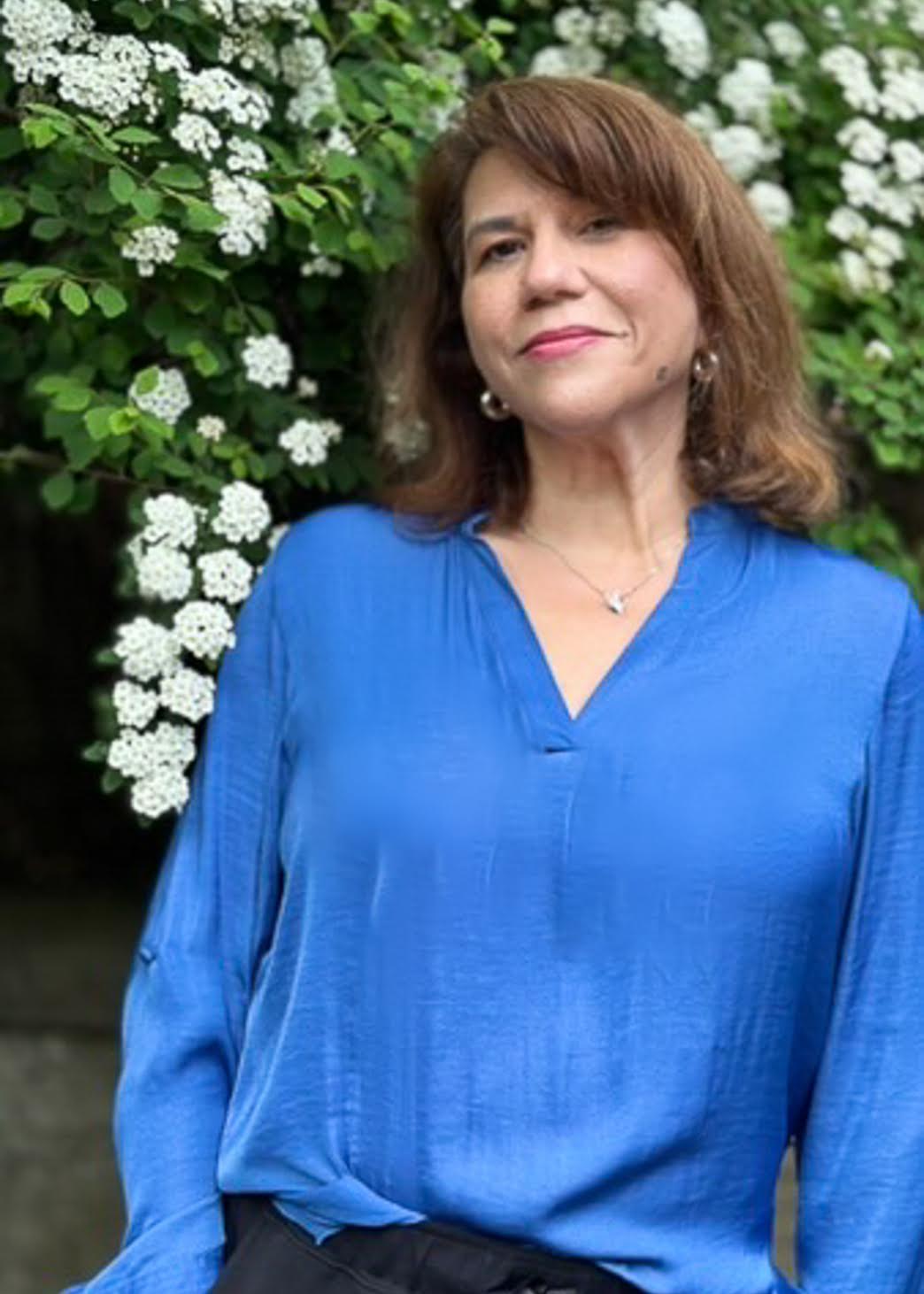
Liz Renzetti

Elizabeth Renzetti is a bestselling author and journalist. She is the author of five books, most recently the national bestseller What She Said: Conversations About Equality. She’s also the author, alongside Kate Hilton, of the Quill & Packet mystery series. Their first novel, Bury the Lead, was published in 2024, and Widows and Orphans followed in 2025.
As a journalist, Elizabeth reported from London, Los Angeles, Toronto, and Berlin, and wrote a popular column on current affairs in The Globe and Mail. In 2025, she was awarded a King Charles III Coronation Medal for her work on gender equality, and she has twice won the Landsberg Prize for reporting on gender issues. She lives in Toronto with her family and two very bad cats.
Praise for What She Said:
“What She Said is frank, funny, and unfailingly honest …. Should be mandatory reading!” – Lisa LaFlamme, journalist
“What She Said is as honest as it is painful and smart …. It made me weep, laugh, and ultimately helped me exhale.” Kathleen Wynne, former premier of Ontario
Liz is an experienced public speaker and can lecture on numerous topics including:
Women in Leadership
Women are underrepresented at all levels of leadership in every field. And it’s getting worse. At a time when companies are rolling back their diversity policies, what does the future hold for women in leadership roles? Drawing upon years of reporting, interviews with leaders in politics and business, and her own story as a woman in management, Liz speaks to this fraught moment – and the future ahead.
Gender Inequality & Why It Harms Us All
We know that we are facing an unprecedented backlash to the rights of women and non-binary people, not just in North America, but around the world. Young women and young men grow farther apart in their political beliefs. How did we get to this place, and how do we find a way out that heals rather than harms?
Teamwork is Dreamwork
As the co-author of a fictional mystery series, and as a journalist who participated in many group projects, Liz can reveal the secrets of what makes for a fruitful partnership. How to choose the right collaborator, best ways of working that will not lead to divorce, and how to successfully play to a team’s strengths and weaknesses are all part of the discussion.
The Misinformation Crisis & The Power of Journalism
How do we move forward as a society if we can even agree on facts? As a journalist with decades of newsroom experience, Liz can talk about how journalism is facing this crisis, and what we can do to understand each other better.
Liz also hosts panel discussions, conducts public interviews, and gives workshops on interviewing techniques.

Peg Fong
Peg Fong is a journalist and an educator. She is the Vancouver writer for The Economist Magazine, a journalism instructor at Langara College and a business communications lecturer at the Sauder School of Business at the University of British Columbia and Kwantlen Polytechnic University. The former western bureau chief of The Toronto Star, Peg was also a staff reporter at The Globe and Mail, Vancouver Sun and the CBC. In 2020, she was the creator and host of the podcast Alone Together: A Curious Exploration of Loneliness and the author of the young adult book of the same title published in March 2024 by Orca Books. The Spanish version of the show Juntos en Soledad reached the top 10 of the podcast charts in Mexico in 2023. Japanese and Korean versions of the show will launched in 2024.
Her writing has appeared in the Daily Telegraph, The Sydney Morning Herald, New Zealand Herald, the South China Morning Post and The New Quarterly.
Speaking Topics
Loneliness and Curiosity
We are living in lonely times. Loneliness is now a global epidemic. The health risks associated with it have cost billions and have factored in everything from cardiovascular diseases to dementia to depression and anxiety. Our sense of isolation is universally recognized, yet it is an intensely private feeling. We all experience loneliness differently. Still, are there things we can share from being alone together? The biggest lessons we can learn about loneliness are found through curiosity and understanding the way we see ourselves and the world around us.
Students and Resilience
Students today face challenges and distractions that previous generations never did. An increasing number of competing demands on their time and attention can hinder their academic performance. We can’t blame it all on social media. First-generation students have even more unique obstacles and often can’t relate to other students who share the same classroom. Innovative communication and learning techniques can help create communities in the educational environment and bring students together.
Building Social Connections Anywhere at Anytime Through Storytelling
From boardrooms to classrooms, around family dinner tables, and around the world, the communities created by shared experiences bind us to each other. We can all learn to be better business leaders, colleagues and educators when we listen and become a community through the gift we can all give and receive: storytelling. This talk is a workshop with writing prompts and brainstorming ideas to use stories to solve problems, find solutions and build confidence.
Journalism, Communications and Public Interest
Imagine a world without journalism. Ethical journalism and communications have never been more critical in today’s world. We live in a time when truth and objectivity are considered untrustworthy and unattainable. How can we trump cynicism about how journalists and communicators inform and engage with the public? This talk is an interactive and hands-on workshop where small groups break down how trust is earned and maintained.
Peg in the Media
CBC TV News
Sam Sullivan’s Salon
Apostrophe podcast
To book Peg Fong, contact Rob Firing at speakers@transatlanticagency.com.
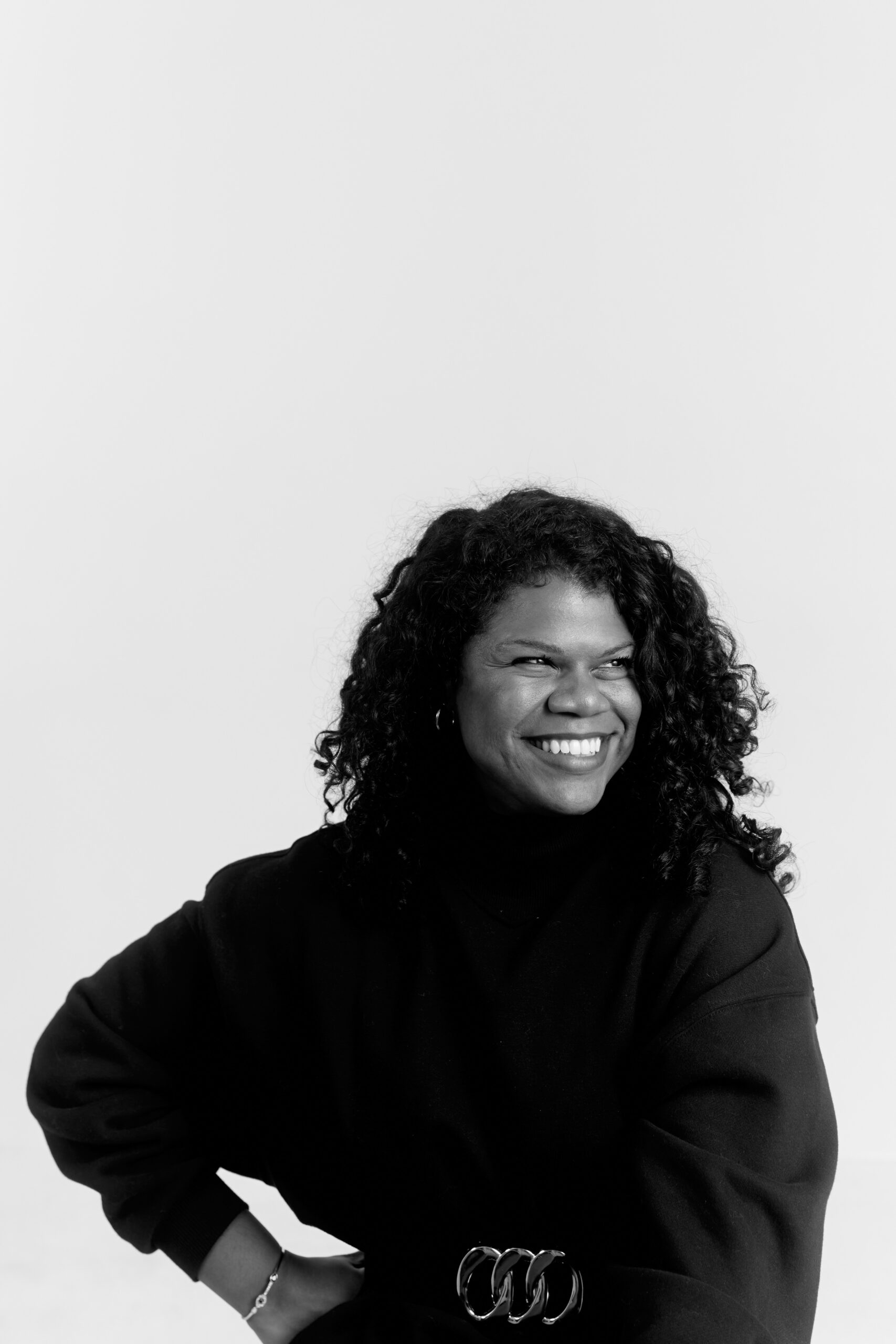
Eternity Martis
Eternity Martis is an assistant professor in the School of Journalism at Toronto Metropolitan University and an award-winning Toronto-based journalist. She was a 2017 National-Magazine-Awards finalist for Best New Writer and the 2018 winner of the Canadian Online Publishing Awards for Best Investigative Article. Her writing has appeared in Vice, Huffington Post, The Walrus, CBC, Hazlitt, The Fader, Salon, and on academic syllabuses around the world. Her work on race and language has influenced media style guide changes across the country.
She is the course developer and instructor of Reporting On Race: The Black Community in the Media at Toronto Metropolitan University, the first of its kind in Canada. In 2021, she was the University of British Columbia’s Journalist-in-Residence and Asper Visiting Professor, and the first Non-Fiction Writer in Residence at Simon Fraser University in 2022. She earned an honours BA and a Certificate in Writing from Western University and an MJ from Toronto Metropolitan University. In 2020, she was named one of Canada’s Top 100 Most Powerful Women by Women’s Executive Network.
Her bestselling debut memoir, They Said This Would Be Fun, was a “Best Book of the Year” pick by Globe and Mail, Apple, Audible and Chapters/Indigo. CBC called the book one of “20 moving Canadian memoirs to read right now” and PopSugar named it one of “5 Books About Race on College Campuses Every Student Should Read.” They Said This Would Be Fun won the 2021 Kobo Emerging Writer Prize for Non-Fiction and was an Evergreen Award finalist.
Speaker Topics
What Does it Mean to be a Student (and Woman) of Colour on a Canadian University Campus Today?
*This talk is also delivered as a workshop with breakout groups to collectively work on ways to implement better support for students of colour.
In universities across Canada, race-based data is not collected, so it’s almost impossible to understand the needs and challenges of students of colour—and there are many. Even more, there is no formal policy across all universities to deal with racism. According to a CBC investigation, while students of colour experience many race-based incidents on campus, most don’t file a formal complaint because they don’t feel they will be believed.
In this talk, Eternity will share her own journey as a university student on a predominantly white campus—which she details at length in her memoir, They Said This Would Be Fun: Race, Campus Life, and Growing Up. Debunking the myth of Canada’s racial tolerance and the idea that student life is “breezy”, she leads us through her own experience as a Black young woman on campus and ties it to the devastating history of racism at Canadian universities, the re-emergence of blackface parties, and the rise of the alt-right, white supremacy and hate crimes at schools, both from far-right groups and students.
From there, Eternity will examine the impact of racism on campus on students, detailing well-researched links to poor health and a drop in academic performance, both of which she experienced herself as a student. The talk will end with possibilities for how we can all better support students of colour, from parents, friends, professors and allies, to what administrators and decision-makers can start doing now to make campuses more welcoming for students of colour.
The Power of Personal Storytelling for Marginalized Groups
*This talk is also delivered as a writing workshop, with writing exercises and break out groups to discuss ideas.
Writing memoir has long disregarded young and marginalized people with questions such as “you’re too young, what could you possibly write about?” “You haven’t been through enough yet,” and “You’re ungrateful—be happy for what you’ve got.” Yet the works of white male memoirists are often celebrated. However, memoir writing has been a tool for marginalized groups for centuries—and now is the best time to reclaim it.
In this talk, Eternity will take you through the history of memoir and personal writing, drawing parallels from history to present-day struggles to show us that while much has changed throughout history, much has stayed the same: narratives from the civil rights era to stories day in the Black Lives Matter era; accounts of sexual assault from the first and second waves of feminism and #MeToo stories; stories from residential school survivors and continual attempts to seek truth and reconciliation today. Next, using her own experience as a memoirist, editor, and writing coach, Eternity examines the role of personal and memoir writing today in our current climate where so many people—immigrants, LGBTQ2S+ people, people of colour, young people—are being dehumanized, and presents the case for why personal writing and putting our stories in the public record is still an act of resistance, and how it can offer healing, societal action, and a way forward.
A Silent Killer: Interpartner Violence Among Millennial Women
One of the most prevalent crimes against women in their 20s — also known as Millennial women— is sexual assault, and while there are awareness campaigns by both schools and students, interpartner violence is hardly discussed, despite young women in their early-to-mid 20s being the most at-risk group for interpartner violence (IPV) and one of the most at-risk groups for interpartner homicide in Canada.
When we think of violence against women, it’s often in the context of a domestic problem—an issue that affects often older, married women—or in dating violence situations which involves teenagers. But why aren’t we discussing the group of women navigating abusive relationships while in their 20s?
Eternity takes a closer look at violence against Millennial women by using her own experience and the stories she’s learned through her career as an award-winning journalist to break down the unique factors such as social media, societal myths, race and hookup culture that affect Millennial women’s relationships and reporting of IPV—and how we can all work to better understand and fight violence against young women.
Rethinking Objectivity: The Role Of Journalism In A Social-Justice Era
For decades, journalists have been committed to unbiased reporting and to shining a light on injustices in our society, but what if those two concepts are fundamentally incompatible? In a Black Lives Matter and #MeToo era where politicians, companies and celebrities are taking social justice stances, what role do journalists play in naming and reporting on injustice? And in what ways has objectivity been harmful to marginalized groups?
In this talk, award-winning journalist Eternity Martis will explore how the concept of objectivity has shifted since 2014 with the emergence of the global #BlackLivesMatter movement, and how journalists continue to be essential to how our society understands and responds to injustice.
Using decades of high-profile examples, from the 1989 Central Park Five case, the 1994 Just Desserts case, the Black Lives Matter protests of the 2010s and the 2021 Capitol Hill insurrection, Martis will examine the shocking ways that objectivity has left out the most marginalized voices, stories and truths, and the real-life harm it has caused communities of colour. Martis will also address the urgent role journalists play in an increasingly polarized society, and the new directions journalism is taking to create more inclusive reporting.
The Power of Perception: The Impact of Journalism on The Well-Being of Black Communities
How much power does journalism have over people’s lives? More than you think.
Journalism is one of the most popular influences in our society. It determines our perceptions of events, ideas and people, but it also plays a direct role in the well-being of communities — especially underrepresented communities.
Despite journalism and media becoming increasingly more inclusive and accountable in its coverage of race and racism over the past seven years since #BlackLivesMatter, its practices, as well as unchecked bias in the industry, have had real-life consequences for Black communities, causing the perpetuation of harmful stereotypes and a lasting impact on their ability to thrive socially, economically, and politically in our society. Even with the best of intentions, today’s coverage is still causing detrimental effects on the health and well-being of Black communities. In an era of racial reckoning and accountability, how does an industry with so much power ensure it doesn’t continue to cause irreparable harm to Black people?
In this talk, award-winning journalist Eternity Martis will explore how journalism and media — both historically white industries — contribute to negative life outcomes for Black people. From the (lack of) representation of Black characters on TV, to the editorial decisions made by journalists to air viral videos of Black death, Martis will examine the media’s concerning and substantial impact on Black people’s socio-economic status and participation in society, and offer possibilities for both journalists and media consumers to participate in creating practices that have positive and healing impacts on Black communities and their well-being.
To book Eternity Martis, contact Rob Firing at speakers@transatlanticagency.com.

Rachel Giese

Rachel Giese award-winning journalist and the editorial director of Xtra, Canada’s largest LGBTQ2 media organizations. In 2018, her book Boys: What it Means to Become a Man was one of The Globe and Mail’s 100 best books of year and one of The Walrus’s favourite reads.
Giese is a sought-after expert and speaker in the fields of gender, masculinity, sex and sexuality, LGBTQ2 rights, education, parenting and feminism. For four years, she wrote a weekly column on politics, pop culture and feminism for Chatelaine. She is regular guest host and commentator on CBC Radio shows, including Day 6, The Current, Metro Morning and The Sunday Edition. Her award-winning feature and opinion pieces have appeared in The Globe and Mail, The Walrus, Toronto Life and NewYorker.com. She is frequent speaker, moderator and host for organizations such as the Toronto Public Library, the Institute for Canadian Citizenship, Shelter Movers and the Movember Foundation.
Her critically-acclaimed Boys: What It Means to Become a Man is a vital and sweeping examination of today’s “boy crisis,” demonstrating the ways in which we raise boys into a culture of toxic masculinity and offering solutions that can liberate us all. Whether they’re being urged to “man up” or warned that “boys don’t cry,” young men are subjected to damaging messages about manliness: they must muzzle their emotions and never show weakness, dominate girls and compete with one another. But Giese provides ample evidence for a powerful counter-narrative: given space to explore their identities and a social structure that makes it safe to do, boys are happy to escape the “man box” of traditionally defined masculinity.
Speaking Topics
Giese can speak on a wide range of subjects related to gender, masculinity, feminism, sex and sexuality, including:
- How to help boys and young men break free from the “man box”
- Gender and the nature-vs-nurture debate
- Understanding and dismantling the roots of toxic masculinity
- The myths and realities of the boy crisis in education
- Beyond the birds and bees for better and more comprehensive sex education
To book Rachel Giese, contact Rob Firing at speakers@transatlanticagency.com.

Shaughnessy Bishop-Stall

Shaughnessy Bishop-Stall is a journalist, teacher, actor and author, among some even less pragmatic things. His first book, “Down to This: Squalor and Splendour in a Big-City Shantytown” — about a year he spent living with the homeless — was short-listed for several prestigious awards, none of which it won. His first novel, “Ghosted,” about a guy who becomes a professional ghostwriter of suicide letters, was nominated for the Amazon First Novel Award, which he also lost. His work has appeared in dozens of magazines — most of which no longer exist. He played the role of Jason, a well-dressed, bad mannered journalist, on CBC’s The Newsroom — in what turned out to be its final season. He used to own a bar in Toronto, called the Lowdown, but that didn’t work out either. He is, however, a helluva talker — although the title of his new book, Hungover: The Morning After and One Man’s Quest for a Cure, kind of speaks for itself.
Shaughnessy has given talks, been interviewed and served as host at numerous international writers’ festivals, universities, fundraisers, and on countless TV and radio programs. He teaches Creative Writing at the University of Toronto.
Speaking Topics
Hangovers
At first this may seem like a somewhat limited subject, but after nearly a decade of intense research and unmitigated mishap, travelling to a dozen countries and more than thirty cities, the toughest part was containing all he found in just one book. Hungover: The Morning After and One Man’s Quest for a Cure — which will be published this November in Canada, the US, UK, Germany, Poland and Korea — is a potent elixir of social history, scientific experiment, pop-culture essay, medical endeavor, academic scholarship, adventure story, philosophical examination, boozy biography, mythic quest, cautionary tale, and regrettable memoir.
The speaker’s subtopics about hangovers are numerous and varied, including sports, music, literature, movies, medicine, marketing, business, politics, near-death experiences, etymology, psychology, food and drink, winemaking, beer brewing, distillation and art history. Oh and he’s also willing to divulge the cure.
Homelessness
Since the release of Down to This: Squalor and Splendour in a Big City Shantytown, the author has given dozens of talks about his year living in Toronto’s Tent city — a lawless, fascinating homeless settlement on the edge of Lake Ontario. He welcomes any opportunity to speak openly and honestly about his first-hand experience with the violence, drug addiction and desperation of that life, and also the bravery, brilliance and kindness of so many people he used to know.
Writing
Shaughnessy has been teaching Creative Writing at the University of Toronto for more than 15 years now. He has written lectures and lessons on every facet of fiction, non-fiction and journalism, and has led countless workshops on Writing the Memoir, Writing the Novel and Creative Non-Fiction. When not teaching his own classes, he spends much of his professional time as a visiting lecturer and keynote speaker.
To book Shaughnessy Bishop-Stall, contact Rob Firing at speakers@transatlanticagency.com.